Key Principle
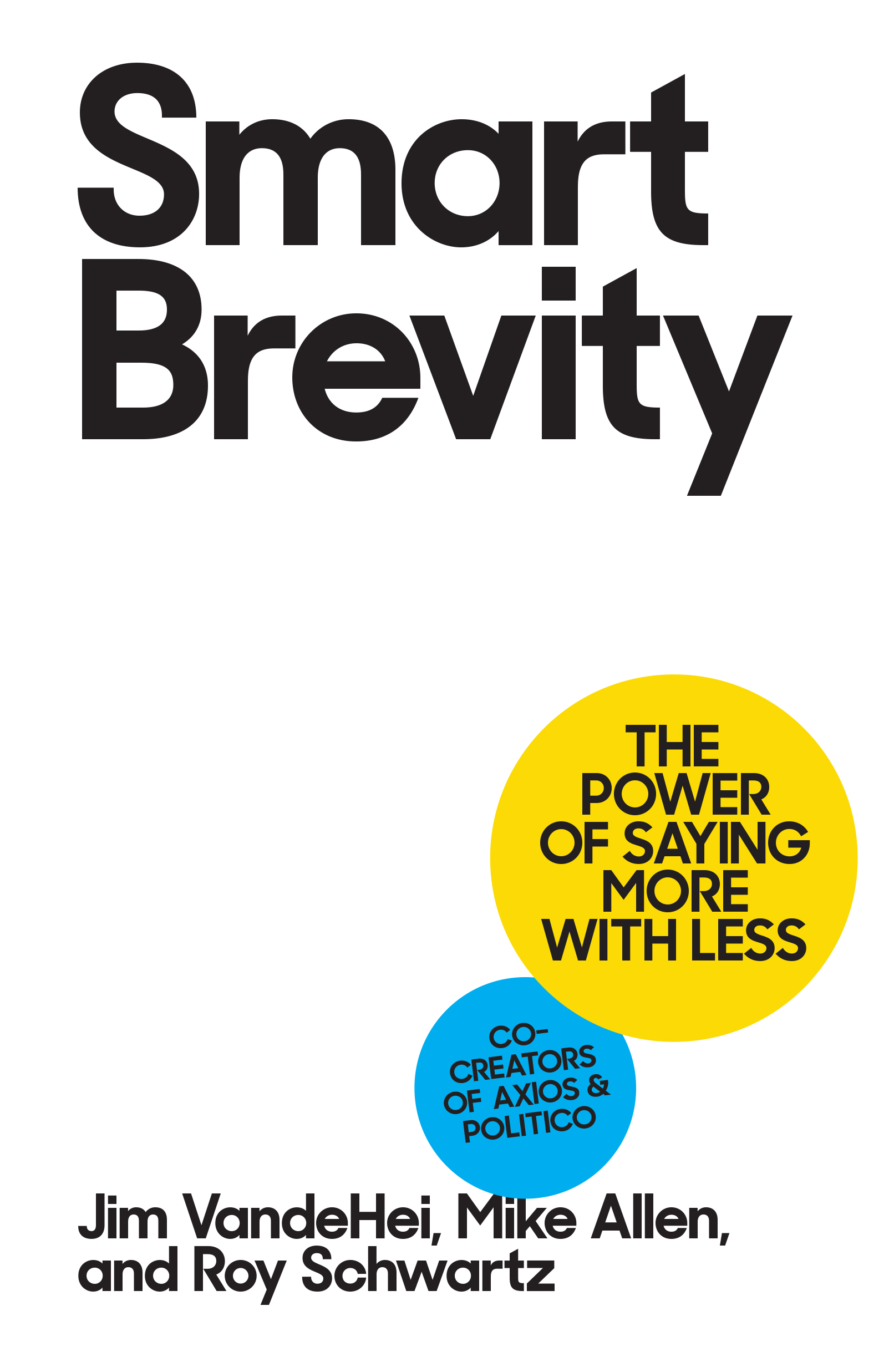
"There is a guiding principle that applies to all communications, but to presentations in particular: Simplify to exaggerate." Strip away everything non-essential so that what remains lands with greater force. This is not dumbing down — it is amplification. On social media, the same principle compresses to its extreme: the capture window collapses to a fraction of a second, and every Smart Brevity rule becomes a survival-level requirement. The dual-stimuli cognitive limit (the brain can process a maximum of two simultaneous stimuli when taking in new information) is the neurological foundation for both. (Part 3)
Why This Matters
Presentations fail not from lack of content but from failure to answer one question before building: "What do I want the audience to remember and do?" When that question is unanswered, every decision defaults toward adding more — more slides, more text, more transitions — which actively degrades comprehension. More content is not a hedge; it is a guarantee of failure. Edward Tufte compared PowerPoint to a "prescription drug" with frequent serious side effects — communication degradation. A presenter speaking while showing dense bulleted text introduces a third stimulus, overloading all three channels simultaneously. John Medina (molecular biologist) quantified the alternative: adding an arresting image increases recall to 65%, versus 10% when information is only heard.
Social media compresses the same dynamic to its limit. Card-based feed design imposes a hard structural constraint regardless of content quality. Readers scroll at speed and will not expand unless the visible portion earns it. The platform is not a neutral distribution channel — each has a distinct UX-imposed emotional register, and applying the wrong register to the wrong platform wastes effort even when the content is strong.
Good Examples
The billboard test. If a driver at 65 mph cannot absorb a slide's point in 3 seconds, the slide has failed. This is a portable real-time heuristic applicable to any slide in any deck — a practical operationalization of "Simplify to exaggerate." One message per slide, 3-second absorption test, one font and visual style. (Part 3)
"Moon's wet" versus the alternative. The compression imperative at its sharpest: "Moon's wet." (A+) versus "There is water on the moon's surface, and ice may be widespread in its many shadows, according to a pair of studies published Monday in the journal Nature Astronomy." The former captures; the latter is filtered before the brain registers it. The loss does not happen at the reading stage — it happens at the scan stage, before the reader decides to read. (Part 3)
Give, don't ask (social media). A winning social post delivers something of immediate value — an idea, a score, a surprising data point, a laugh — before or instead of asking the reader to click, buy, or act. The causal chain: value given upfront → reader engages (like/share/comment) → algorithm registers high engagement → distributes to more users → reach compounds. Action-first posts signal extraction rather than provision; algorithms and readers suppress them in parallel. (Part 3)
Counterpoints
Wall Street late-night deck culture. Elaborate decks "that do absolutely nothing to inform, persuade or motivate." Effort and effectiveness are not correlated — they can be inversely related. The McKinsey 10:1 rule (2 slides for every 20 desired; cap at roughly a dozen total) exists precisely because organizational instinct always pushes toward more slides as a hedge, requiring a credibility-backed counterweight. (Part 3)
Platform register mismatch. A Twitter-style fact dump on Facebook fails (no provocative hook). A Facebook-style provocation on Instagram looks out of place (wrong visual register). Platform temperament is not optional context — it is a prerequisite for reach. Twitter is "jumpy" (information-seeking, time-pressured). Instagram is visual browsing. Facebook requires a provocative angle to surface above the News Feed; bland content "vanishes without a trace." (Part 3)
No explicit ask on the final slide. Even a well-structured presentation fails to produce action if it ends without a specific, direct ask. Fill in the blank before building the deck: "I called this meeting and created this deck so I can get _______ or teach you _______." Without an explicit ask, the audience leaves without a directive — the presentation's purpose evaporates at the moment of greatest leverage. (Part 3)
Key Quotes
"There is a guiding principle that applies to all communications, but to presentations in particular: Simplify to exaggerate." — VandeHei, Allen & Schwartz, Part 3
"Social media is the hand-to-hand combat of attention warfare." — VandeHei, Allen & Schwartz, Part 3
"A winning formula for most social media posts is giving something to the audience — an idea, a score, a laugh — rather than asking them to click, buy or do something." — VandeHei, Allen & Schwartz, Part 3
"Words without art are a loser everywhere." — VandeHei, Allen & Schwartz, Part 3
"Social media forces us to be ruthlessly selective. No matter how awesome your idea or prose, Twitter, Instagram and Facebook will ration what gets seen on a given card." — VandeHei, Allen & Schwartz, Part 3
Rules of Thumb
- Answer "What do I want the audience to remember and do?" before building the first slide.
- Apply the billboard test: if a driver at 65 mph cannot absorb the slide's point in 3 seconds, rewrite it.
- One message per slide; one font and visual style throughout the deck.
- Apply the McKinsey 10:1 rule: for every 20 slides you want, use 2; cap at roughly a dozen total.
- Lead with pictures — images increase recall to 65% versus 10% for voice alone (John Medina).
- Always close with a specific, direct ask; fill in the blank before you build.
- Know platform temperament before writing: Twitter favors urgent facts; Instagram requires a visual hook; Facebook requires a provocative angle.
- Give before asking on social: deliver value (idea, data point, laugh) directly in the post rather than asking for a click.
- Choose clean, simple, arresting images across all platforms — "words without art are a loser everywhere."
- Apply Smart Brevity writing principles (strong simple words, active verbs) to every post; the card limit is a creative discipline, not a limitation.
Related References
- Meetings and Speeches - live verbal communication frameworks including the One Big Thing and Seven-Step Speech structure
- Newsletters and Email - written recurring format frameworks with the same compression discipline