Key Principle
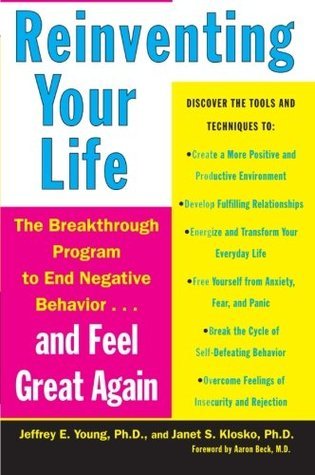
Lifetraps are self-defeating patterns that originate in childhood and repeat throughout life. They persist not through ignorance or habit but through an identity-preservation mechanism: the familiar pain of the schema feels safer than the disorientation of life without it. Because schemas operate simultaneously across cognitive, behavioral, and emotional dimensions, change requires an integrative approach that addresses all three — cognitive restructuring alone cannot close what Young calls the "insight-emotion gap."
The model rests on three structural pillars:
Eleven lifetraps organized into six domains of unmet childhood need: Basic Safety (Abandonment; Mistrust & Abuse), Connection to Others (Emotional Deprivation; Social Exclusion), Autonomy (Dependence; Vulnerability), Self-Esteem (Defectiveness; Failure), Self-Expression (Subjugation; Unrelenting Standards), and Realistic Limits (Entitlement).
Three coping styles — Surrender, Escape, and Counterattack — explain how children raised in the same family can appear completely different while sharing the same underlying wound. Surrender recreates the pattern; Escape avoids triggering it; Counterattack adopts the opposite persona.
Graduated, integrative change combining cognitive exercises, behavioral pattern-breaking, and experiential reliving of childhood emotion — always progressing from manageable tasks to harder ones.
Why This Matters
Without this framework, chronic self-defeating patterns get misdiagnosed as discrete symptoms (depression, anxiety, relationship conflict) and treated with single-modality interventions that produce temporary relief but no structural change. Patients cycle through therapies, get labeled "treatment-resistant," and internalize yet another failure. The lifetrap model reframes the problem: these patients are not resistant — they are mismatched to treatments designed for a different level of the problem.
The identity-preservation mechanism also explains why insight alone consistently fails. A patient can fully understand their pattern and still feel unable to change, because the schema is not just a belief — it is a felt sense of who they are. The integrative model addresses this by requiring emotional reliving alongside cognitive and behavioral work.
Good Examples
The Chemistry Trap: Patrick (Abandonment lifetrap) felt more drawn to his unfaithful wife the more unpredictable she became. When he chose a stable partner, initial chemistry was lower but contentment was higher. Intense romantic attraction signals lifetrap activation, not compatibility — "this feels like home" is recognition of a childhood dynamic, not evidence of love. (Chapter 1)
Three coping styles, one wound: Siblings raised in the same abusive household can look entirely different — one surrenders and marries an abuser, one escapes through substance use, one counterattacks and becomes controlling. The surface presentations diverge, but the underlying Mistrust & Abuse lifetrap is shared. (Chapter 4)
Carlton's graduated assertiveness: Rather than confronting his domineering father first, Carlton practiced assertiveness with strangers, then acquaintances, then coworkers, then family. Attempting his father first was "setting himself up for failure." (Chapter 5)
Counterpoints
Counterattack mimics health: Counterattackers can appear successful and confident, but "their superiority is easily deflated. Eventually there is a crack in the armor, and the whole world feels as if it is collapsing" (Chapter 4). Mistaking counterattack for genuine well-being leaves the underlying lifetrap untreated.
Insight is not change: "Most patients tell us that for many months they still feel deep down that the lifetrap is true, regardless of what logic and evidence tell them" (Chapter 5). Treating intellectual understanding as the endpoint produces frustration and premature termination.
Overprotection is not safety: The Autonomy domain (Dependence; Vulnerability) is damaged by overprotective parents who are often loving, not malicious. The harm is prevention of self-reliance, not hostility. This origin is easy to miss because it does not look like "bad parenting." (Chapter 3)
Key Quotes
"To give up our belief in a schema would be to surrender the security of knowing who we are and what the world is like; therefore we cling to it, even when it hurts us." — Young & Klosko, Chapter 1
"Schemas are hard to change. They are supported by cognitive, behavioral, and emotional elements and therapy must address all of these elements. Change in only one or two realms will not work." — Aaron Beck, Foreword
"It is very difficult to change deep pain without first reliving it." — Young & Klosko, Chapter 5
"We cannot change things that we do not admit are problems." — Young & Klosko, Chapter 4
Rules of Thumb
- If a pattern feels like identity ("I have always been this way"), it is operating at the schema level — symptom-focused techniques will not reach it.
- Intense romantic chemistry is a warning sign, not a green light. Ask: "Does this feel like home — and was home safe?"
- Always attempt manageable tasks first. Failure experiences reinforce the very lifetrap being treated.
- Safety lifetraps (Abandonment, Mistrust & Abuse) must be addressed before other domains — they consume the psychological resources needed for all other work.
- Normalize the insight-emotion gap: "Insight comes quickly, but change comes slowly." Expecting otherwise produces discouragement that looks like treatment failure.
- Use flashcards as daily behavioral practice, not just cognitive reminders — repetition is what closes the gap between knowing and feeling.
Related References
- abandonment - The Abandonment lifetrap: subtypes, cycles, and treatment direction
- mistrust and abuse - The Mistrust & Abuse lifetrap: dissociation, domain-specificity, trust repair
- Surrender, Escape, and Counterattack - Surrender, Escape, and Counterattack in depth
- The Eight-Step Change Process - The eight obstacles to change and graduated difficulty protocol