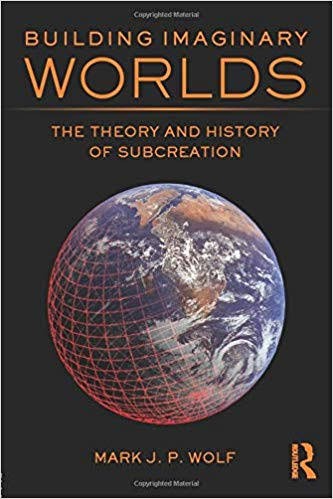
Key Principle
Subcreation -- the building of secondary worlds by recombining existing concepts -- is not a hobby or aesthetic preference but a defining human activity grounded in the theological claim that we are made in the image of a Creator God. The intellectual lineage runs from Coleridge (imagination as active, not passive) through MacDonald (invented worlds must obey internal laws) to Tolkien (subcreation as sacred vocation). Wolf deepens this into a formal defense: subcreation cooperates with divine creation rather than usurping it, and the desire to subcreate "precedes our fallen state" (Chapter 14).
The formal structure of the defense:
- Subcreation uses pre-existing materials -- it differs from ex nihilo creation
- Therefore it cooperates with rather than usurps divine creation
- The subcreative desire precedes the Fall -- it is pre-lapsarian, not a consequence of sin
- It is "both a gift and part of a divinely-mandated vocation calling us to carry on the work that God has begun" (Chapter 14)
- Abusus non tollit usum -- abuse does not invalidate use
- Conclusion: "Fantasy remains a human right" (Chapter 14, quoting Tolkien)
Why This Matters
The stakes are existential, not merely literary. If subcreation is an ontological necessity -- something definitional of what it means to be human -- then dismissing world-building as escapism or frivolity is a category error. The Coleridge-MacDonald-Tolkien lineage provides the philosophical scaffolding:
- Coleridge establishes that imagination is active and creative, not passive recombination. Primary Imagination coordinates sensory data into perception; Secondary Imagination consciously "dissolves, diffuses, dissipates, in order to recreate" (Chapter 1).
- MacDonald insists that invented worlds must have internal harmony: "The moment he forgets one of them, he makes the story, by its own postulates, incredible. Those broken, we fall out of it" (Chapter 1).
- Tolkien synthesizes both into a theology of subcreation where the mechanism is linguistic: abstracting qualities from objects enables recombination into new forms. Going beyond known creation is not transgression but the very purpose of the subcreative gift.
The failure mode is twofold: treating world-building as mere entertainment strips it of meaning, while treating it as divine creation (ex nihilo) commits the opposite error of hubris. Tolkien's decisive argument is that subcreation should not be limited to imitating known Creation -- "Liberation 'from the channels the creator is known to have used already' is the fundamental function of 'subcreation', a tribute to the infinity of His potential variety" (Chapter 7).
Good Examples
- Tolkien's linguistic subcreation: Abstracting qualities from the Primary World and recombining them -- "When we can take green from grass, blue from heaven, and red from blood, we have already an enchanter's power -- upon one plane" (Chapter 1). Over 55 years of sustained work on Arda exemplified subcreation as vocation.
- Rand Miller on Myst: "We know how much work it took to create Myst, and how puny and unreal it is compared to the real world, and therefore how miraculous all of creation is" (Chapter 7). The gap between any subcreated world and the Primary World produces humility and wonder.
- The Polish linguistic parallel: The distinction between stworca (creator, ex nihilo) and tworca (craftsman, from existing materials) independently captures the same theological distinction Tolkien formalized (Chapter 7).
Counterpoints
- Secondary Belief vs. Suspension of Disbelief: Tolkien rejects Coleridge's "willing suspension of disbelief" as insufficient. Secondary Belief puts the burden on the subcreator to build a world convincing enough to generate active belief, not on the audience to suppress doubt. "The moment disbelief arises, the spell is broken; the magic, or rather art, has failed" (Chapter 1).
- The God Games Debate: Herzfeld argues that the Imago Dei implies mutual relationship, which god games cannot provide -- they foster "playful experiences of power and control" instead. Wolf synthesizes: subcreation broadly reflects the Imago Dei, but the relational critique applies to god games specifically (Chapter 14).
- Subcreation as defamiliarization, not escape: Wolf insists subcreated worlds are "instruments of defamiliarization" -- they renew our vision and give perspective on "ontological questions that might otherwise escape our notice within the default assumptions we make about reality" (Chapter 14). Tolkien: "Why should a man be scorned if, finding himself in prison, he tries to get out and go home?" (Chapter 1). Secondary worlds contain oppression, war, and suffering -- they are not escapist refuges but alternative realities that illuminate the actual.
- Participatory worlds as theological endpoint: When audience members make permanent canonical additions to a world, sharing in authorship, the concentric circles model collapses inward -- fans become co-creators. This represents the logical endpoint of the Imago Dei thesis: "The culture of an on-line world can be suggested by the makers of the world, but it is the citizens of the world, the players and their avatars, who will either accept or reject cultural elements, becoming co-creators along with the makers of the world" (Chapter 7).
Key Quotes
"Fantasy remains a human right: we make in our measure and in our derivative mode, because we are made: and not only made, but made in the image and likeness of a Maker." -- Mark J. P. Wolf, Chapter 14 (quoting Tolkien)
"Differing as it does from ex nihilo creation, subcreation is not a usurping of the Creator's role, but rather cooperation with it, and acknowledgement of it." -- Mark J. P. Wolf, Chapter 14
"Subcreation is not just a desire, but a need and a right; it renews our vision and gives us new perspective and insight into ontological questions that might otherwise escape our notice within the default assumptions we make about reality." -- Mark J. P. Wolf, Chapter 14
"His world once invented, the highest law that comes next into play is, that there shall be harmony between the laws by which the new world has begun to exist." -- Mark J. P. Wolf, Chapter 1 (quoting MacDonald)
"For creative Fantasy is founded upon the hard recognition that things are so in the world as it appears under the sun; on a recognition of fact, but not a slavery to it." -- Mark J. P. Wolf, Chapter 14 (quoting Tolkien)
"The most participatory kind of imaginary world is, of course, the one you create yourself." -- Mark J. P. Wolf, Chapter 7
Rules of Thumb
- Subcreation is cooperation with creation, not competition -- position your invented world as extending reality, not replacing it
- Physical laws may be freely invented; moral laws must be preserved from reality (MacDonald's principle)
- The burden of believability falls on the subcreator, not the audience -- build worlds that generate active belief
- Liberation "from the channels the creator is known to have used already" is the fundamental function of subcreation -- going beyond the familiar is the point, not the risk
- The gap between your world's complexity and the Primary World's vastness is a feature: it generates the contemplative humility that keeps the work honest
Related References
- Practical Principles of World Design - operationalizes subcreation theology into practical design constraints
- Rules of Thumb for World-Building - synthesizes actionable heuristics across the entire framework