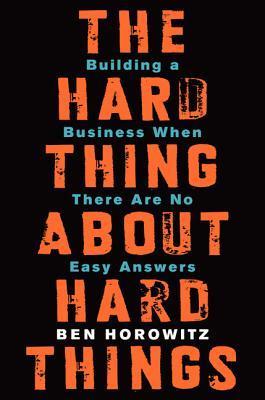
Key Principle
Hire for world-class strength in the dimensions that matter most — and explicitly tolerate significant weaknesses elsewhere. Consensus hiring optimizes for inoffensiveness and produces mediocrity. Once hired, managers must personally train their reports; outsourcing that responsibility signals it belongs to someone else, and it does not.
Andy Grove's leverage calculation: 12 hours of manager preparation yields approximately 200 hours of gained subordinate productivity annually — a 1 percent improvement across 10 employees working 20,000 hours. "Being too busy to train is the moral equivalent of being too hungry to eat." (Chapter 5: Take Care of the People, the Products, and the Profits)
Why This Matters
Most hiring processes surface weaknesses, then optimize to avoid them. The result is executives who offend no one and excel at nothing. If the company needs world-class sales execution, the question is not "does this candidate make people uncomfortable?" — it is "is this candidate a sales savant?" A candidate who fails the first test but passes the second is the right hire. A candidate who passes the first but fails the second is the wrong hire. Consensus committees cannot hold this distinction because individual committee members experience the discomfort but do not individually bear the cost of mediocrity.
Without manager-led training, two compounding failures occur. First, employees have no clear baseline for expectations, so performance management becomes subjective and inconsistent. Second, engineers and other contributors replicate existing facilities rather than building coherently on the architecture — Horowitz calls this producing Frankenstein products. The two primary reasons employees quit are that they hated their manager and that they weren't learning anything. Both causes trace back to a manager who abdicated training.
Good Examples
Mark Cranney at Opsware: Cranney had the wrong educational background, made people deeply uncomfortable in interviews, and delivered a "bullet in your head" speech to new hires about his expectations. Every board member voted no. Horowitz hired him on one dimension: he was a sales savant. Sales grew tenfold, market cap twentyfold. (Chapter 3: This Time with Feeling; Chapter 5: Take Care of the People, the Products, and the Profits)
Acting in the role before hiring: Before hiring any executive, Horowitz would perform the function himself — not to become expert, but to understand what "right" looked like in the company's specific context. Without this, the hiring criteria default to generic functional competence rather than fit for the company's actual situation. (Chapter 5: Take Care of the People, the Products, and the Profits)
CEO teaches the expectations course: At Opsware, the implementation was explicit — the CEO personally taught the new-employee expectations course. Headcount requisitions were withheld from managers who had not built training programs. This made the organizational priority legible: training is a manager's job, not HR's. (Chapter 5: Take Care of the People, the Products, and the Profits)
Counterpoints
The consensus process failure: When hiring decisions are made by committee, each participant reports discomfort with different weaknesses. The candidate who survives is the one with fewest objectors — which means fewest weaknesses, not greatest strengths. The company gets an executive no one hated rather than one who is exceptional where the company needs them to be. "Consensus decisions about executives almost always sway the process away from strength and toward lack of weakness." (Chapter 5: Take Care of the People, the Products, and the Profits)
Outsourcing training to HR: When managers send their reports to HR or external training programs rather than training them personally, the organizational signal is that training is not the manager's responsibility. Employees receive this signal accurately. The result is a workforce with no clear connection between their job expectations and the manager who holds them to those expectations.
Hiring big-company executives without accounting for structural mismatch: Large-organization executives default to responding to incoming requests. In a startup, nothing happens unless someone initiates it. "In the early days of a company, you have to take eight to ten new initiatives a day or the company will stand still." (Chapter 5) A big-company executive who waits for inputs will produce zero output — not from laziness, but because their behavioral defaults were built in an environment where inputs arrived reliably.
Key Quotes
"If you don't have world-class strengths where you need them, you won't be a world-class company." — Ben Horowitz, Chapter 5: Take Care of the People, the Products, and the Profits
"Being too busy to train is the moral equivalent of being too hungry to eat." — Ben Horowitz, Chapter 5: Take Care of the People, the Products, and the Profits
"Consensus decisions about executives almost always sway the process away from strength and toward lack of weakness." — Ben Horowitz, Chapter 5: Take Care of the People, the Products, and the Profits
"If you would be shocked and horrified if Company X hired several of your employees, then you should not hire any of theirs." — Ben Horowitz, Chapter 5: Take Care of the People, the Products, and the Profits
Rules of Thumb
- Before posting a role, act in it yourself — even briefly — to know what world-class looks like in your specific context, not a generic one.
- Write down the critical dimensions and tolerable weaknesses before interviewing begins; do not let the interview process generate the criteria.
- Make the final executive hiring decision alone. Gather input broadly, but do not distribute the decision.
- Withhold headcount requisitions from managers who have not built training programs for their existing reports.
- The CEO personally teaches the expectations course — not HR, not a delegate.
- Apply the reflexive anti-raiding test before extending any offer to an employee from a founder's company.
Related References
- Management Debt and the Law of Crappy People - Management Debt and the Law of Crappy People — what happens when weak hiring and absent performance management compound over time
- Organizational Health at Scale - Organizational Health at Scale — how the right kind of ambition in executives reduces political behavior downstream