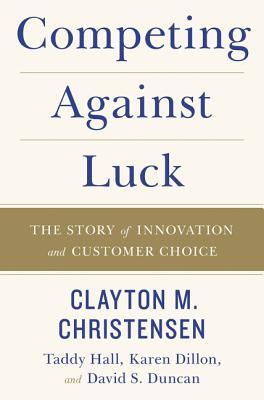
Key Principle
A purpose brand is one that becomes synonymous with a specific job to be done -- customers automatically think of it when the relevant circumstance arises. It is not built through advertising or awareness campaigns but through accumulated successful hirings: "It was built through people hiring the service and finding that it got the job done" (Chapter 6). Purpose brands are "positioned on the mechanism that causes people to purchase a product: they nail the job" (Chapter 6). The price premium a purpose brand commands is not markup -- it is "the wage that customers are willing to pay the brand for providing this guidance" (Chapter 6). The brand reduces the customer's decision burden by serving as shorthand for "this will solve my job."
Why This Matters
Most branding is built on correlation -- awareness, sentiment, demographic association. Purpose brands are built on causation: repeated, reliable resolution of a specific job. The difference is structural, not cosmetic.
A traditional brand tries to be memorable; a purpose brand tries to be the automatic answer when a struggle arises. Companies that do not understand this distinction tend to extend their brand into adjacent jobs where it has no earned authority, diluting the causal link that made the brand valuable in the first place. The result is a brand that means everything in general and nothing in particular.
This also explains why "designed without a clear job spec, even the most advanced products are likely to fail. There are just too many details to nail and tricky tradeoffs to be made in creating customer value for innovators to rely on the luck of just guessing right" (Chapter 6). The purpose brand cannot exist without the job spec beneath it.
Good Examples
FedEx: Became a verb linked to the job "send something as fast as possible with perfect certainty." The brand is the job. No amount of competitor advertising can dislodge that association because it was earned through millions of successful hirings, not through messaging. (Chapter 6)
American Girl: The competitive moat is the experience ecosystem -- historical books, stores with restaurants and doll hospitals, packaging designed to the level of "a two-cent belly band" adding "twenty-seven seconds" to the unwrapping experience. 29 million dolls sold, $500M+ annual sales. No competitor has replicated it despite decades of attempts because "they thought it was a product. They never got the story part right." (Chapter 6)
Milwaukee Sawzall: Has owned 80%+ of its job market for decades. The brand is so tightly fused to the job that competitors cannot gain traction despite functional equivalence. (Chapter 6)
Google, Starbucks, craigslist: All built with minimal advertising. Their purpose brands were constructed through reliable job resolution, not media spend. (Chapter 6)
Counterpoints
Volvo under Ford: Volvo was the undisputed purpose brand for safety. Under Ford's ownership, it was repositioned to compete as a luxury brand -- a job it had no earned authority to fulfill. The brand declined until it was sold at a loss to Geely in 2010. The causal link to a specific job was severed, and no amount of marketing could replace it. (Chapter 6)
Brand extension without job authority: Without purpose brand discipline, companies extend into adjacent jobs where the brand carries no meaning. The brand stops being shorthand for a specific job and becomes a corporate logo stamped on unrelated offerings. This is the most common path to brand dilution.
Forced premium vs. earned premium: Premium pricing earned through job resolution generates gratitude. Forced premium pricing -- printer ink, phone chargers -- "actually causes anxiety, rather than resolve it" and breeds resentment (Chapter 6). The distinction is whether the price is a wage for solving a job or a toll extracted from a captive customer.
Key Quotes
"It was built through people hiring the service and finding that it got the job done." (Chapter 6)
Purpose brands are "positioned on the mechanism that causes people to purchase a product: they nail the job." (Chapter 6)
The price premium is "the wage that customers are willing to pay the brand for providing this guidance." (Chapter 6)
"They thought it was a product. They never got the story part right." (Chapter 6)
Rules of Thumb
- A purpose brand is earned through repeated successful hirings, never through advertising alone. If the brand cannot point to a specific job it reliably resolves, it is not a purpose brand.
- Brand extensions are safe only when the new offering serves the same job. Extending into a different job dilutes the causal link that makes the brand valuable.
- The test of a purpose brand: when the job arises, does the customer think of this brand without prompting? If not, you have awareness, not purpose.
- Premium pricing is sustainable only when customers experience it as wages paid for job resolution, not as a toll. Gratitude vs. resentment is the diagnostic.
- Competitors can copy products and features. They cannot easily copy the accumulated trust of thousands of successful hirings that constitute a purpose brand.
- The strongest purpose brands were built with minimal advertising (Google, Starbucks, craigslist). If your brand strategy depends primarily on media spend, you are building awareness, not purpose.
- Ask "what has to get fired for my product to get hired?" (Chapter 5). A purpose brand must displace something -- understanding what you replace clarifies the job you own.
Related References
- Designing Experiences Around the Job - Experiences that build purpose brands through obstacle removal
- The Jobs-Focused Organization - Internal alignment that protects the brand from dilution
- core framework - Jobs-to-be-done theory foundation: causation vs. correlation